
Cooking instructions


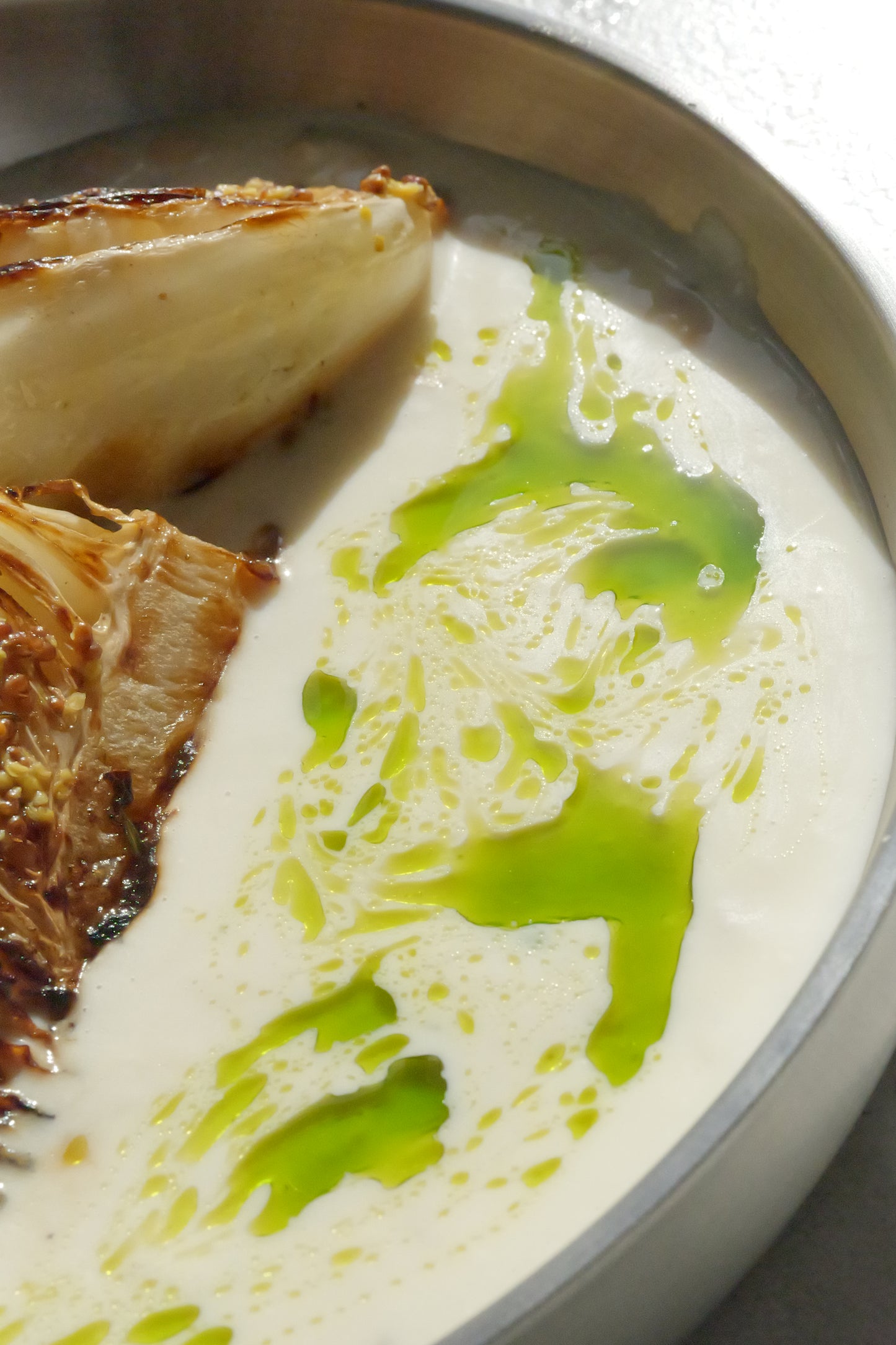
Charred cabbage with tofu–olive oil cream, white beans, sauerkraut, parsley oil & dijon mustard
Charred cabbage with tofu–olive oil cream, white beans, sauerkraut, parsley oil & dijon mustard
What you need
What you need
Ingredients by Cbovero
- Cabbage
- Cooked white beans
- Sauerkraut
- Garlic
- Fresh thyme
- Tofu–olive oil cream
- Raspberry vinegar & lemon dressing
- Parsley oil
- Dijon mustard
Ingredients From Your Pantry
- Sea salt and black pepper
- High temperature oil
Equipment Needed
- Large frying pan
- Saucepan
- Baking tray
- Cooking spoon
- Knife & cutting board
- Serving bowl or plate
Nutritional info
Nutritional info
All nutritional values are based on a per person scale.
Ingredients & Allergens
Ingredients & Allergens
Cabbage, garlic, thyme, cooked white beans, sauerkraut, silken tofu (soy beans), olive oil, rapeseed oil, raspberry vinegar, lemon juice, Dijon mustard (mustard), parsley, sea salt, black pepper.
For allergens please see ingredients in bold.
Please be advised that we handle the following allergens in our kitchen:
CELERY, SOYA, GLUTEN, NUTS, PEANUTS, MUSTARD, SESAME SEEDS, SULPHITES


Cooking Instructions
Before you start, take out all the ingredients for this recipe and rinse any fresh vegetables or herbs.
Try our sensorial experience — an easy way into mindful cooking. 04_01 Sensorial experience EN.mp3
STEP 1 — Prepare the cabbage
Preheat the oven to 170°C. Slice the cabbage into wedges, each wedge will be an eighth of a whole cabbage.
Keep the core intact so the leaves stay together during cooking.
STEP 2 — Sear the cabbage
Place a wide frying pan over high heat and add a drizzle of rapeseed oil. When the oil shimmers, add the cabbage wedges, the garlic cloves, and thyme sprigs.
Sear the cabbage until the underside is deeply golden (about 1–2 minutes).
Tilt the pan and baste the cabbage with the hot oil as it cooks.
Flip and repeat on the other side.
Transfer the cabbage wedges to a lined baking tray.
STEP 3 — Roast
Roast the cabbage 15–20 minutes until tender but still structured.
Check after 10 minutes — smaller wedges may cook faster.
STEP 4 — Prepare the sauce
In a saucepan combine:
- tofu–olive oil cream
- sauerkraut liquid (squeeze it out of the sauerkraut)
- white beans with their liquid
Mix until smooth and integrated.
Add the raspberry vinegar, lemon juice, salt and pepper.
Warm the sauce gently while mixing over low–medium heat. Do not allow it to boil. The sauce should be creamy, slightly tart and well balance
STEP 5 — Plate
Spoon the tofu–bean sauce onto the base of a wide bowl.
Add a small mound of sauerkraut slightly off-center.
Place the roasted cabbage wedge on top.
Finish with:
- parsley oil
- small spoonfuls of Dijon mustard
Serve immediately. Enjoy my dear.
Chef’s Notes
This dish is best eaten with a knife and spoon.
Cut through the cabbage and gather a full spoon with sauce, sauerkraut and beans — the balance of textures is what makes the dish complete.